
Welding Standards Explained: ASME IX, AWS D1.1 & API 1104
ASME Section IX, AWS D1.1, and API 1104 govern different kinds of welding. Here is what each one covers, how welders are qualified, and why it matters for piping and structural integrity.
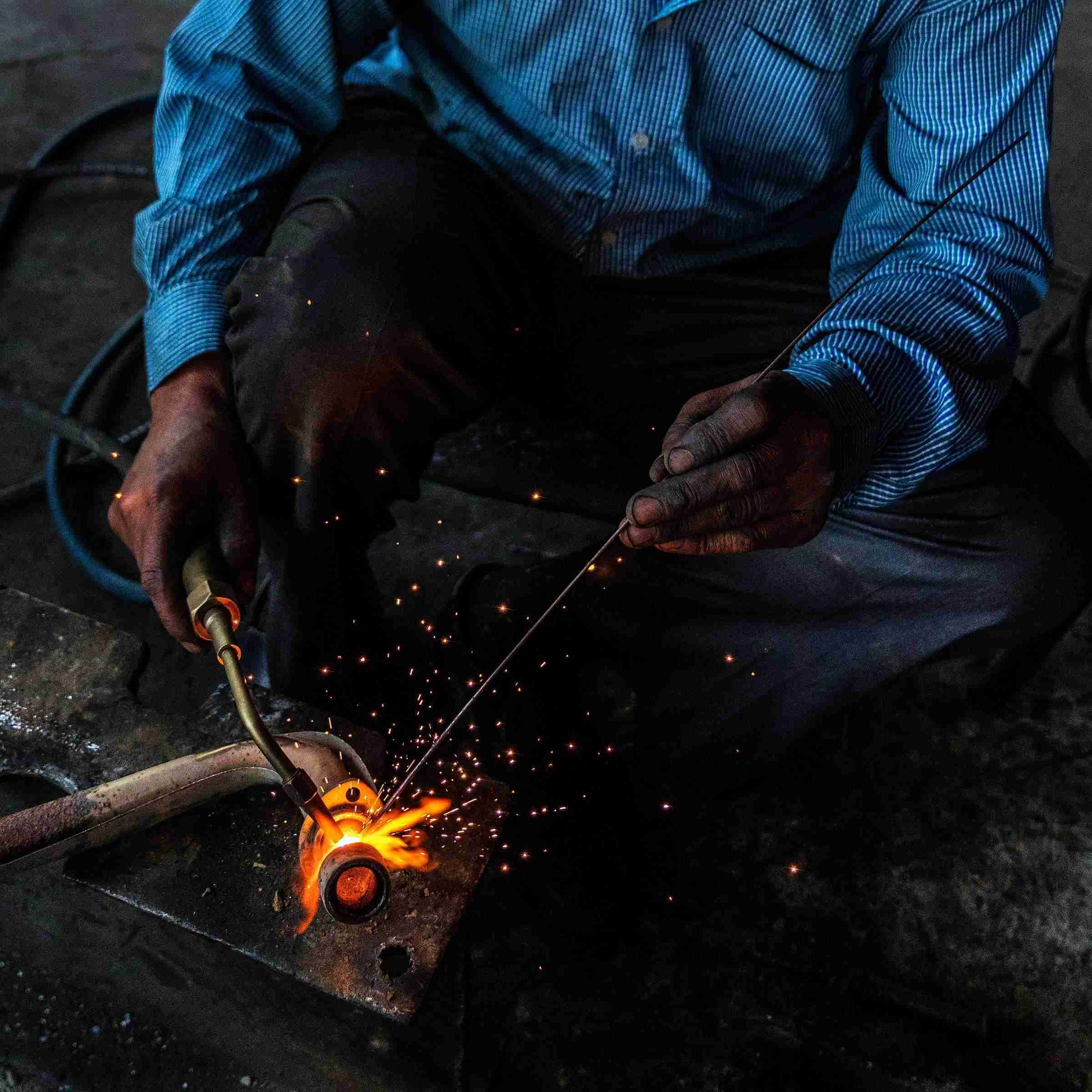
On an industrial project, a weld is only as trustworthy as the standard it was made to and the welder who made it. “We do welding” means very little; “we deploy welders qualified to ASME Section IX, AWS D1.1, and API 1104 as the project requires” means everything. Here is what those standards actually govern, and why the distinction matters for the integrity of your piping and structures.
Three standards, three jobs
The three most-referenced welding standards in the Kingdom's industrial sector are not interchangeable — each was written for a different application:
| Standard | Governs | Typical use |
|---|---|---|
| ASME Section IX | Welding & brazing qualification for pressure equipment and piping | Process piping, pressure vessels, boilers |
| AWS D1.1 | Structural steel welding | Steel structures, platforms, pipe racks, supports |
| API 1104 | Welding of pipelines and related facilities | Cross-country and facility pipelines |
A welder qualified for structural steel to AWS D1.1 is not automatically qualified to weld pressure piping to ASME IX. Matching the standard to the work — and the welder's qualification to the standard — is the foundation of a compliant weld.
WPS and PQR: the paperwork that makes a weld valid
Two documents sit behind every qualified weld, and understanding them demystifies the whole process:
- WPS — Welding Procedure Specification. The written recipe for a weld: the materials, joint design, filler metal, preheat, current, technique, and other variables. It tells the welder exactly how the weld must be made.
- PQR — Procedure Qualification Record. The evidence that the WPS actually produces a sound weld. A test weld is made following the WPS, then destructively tested; the PQR records those results and qualifies the procedure.
Individual welders are then qualified against the procedure. The rule is simple and non-negotiable: only welders holding the certification required by the project specification are assigned to production welding, and their qualification records and test certificates should be verifiable on request.
Why this protects you
A pressure-piping weld that fails in service can cause a leak, a fire, or worse. The WPS/PQR/welder-qualification chain exists so that every production weld is traceable to a proven procedure and a qualified person — not left to chance.
Materials matter too
Welding standards go hand in hand with the base material. Industrial piping spans a wide range — carbon steel, stainless steel (SS304 and SS316), galvanised steel, alloy steels, and non-metallics such as HDPE, uPVC, CPVC, and GRE/GRP. Each material and service condition drives the choice of welding procedure, filler, and inspection regime. Critical-service or specialised-metallurgy piping demands welders and procedures qualified specifically for that application.
Proving the weld: Non-Destructive Examination
Qualification gets you a sound procedure; NDE confirms each finished weld. A layered inspection regime typically includes:
- Visual Testing (VT) — the first-line check on every weld.
- Liquid Penetrant (PT) and Magnetic Particle (MT) — surface and near-surface defect detection.
- Ultrasonic (UT) and Radiographic (RT) — volumetric inspection for internal flaws.
- Positive Material Identification (PMI) — confirming the material grade is what the specification calls for.
Routine visual and dimensional inspection is typically handled by project QA/QC, while certified NDE methods are performed by qualified, approved third-party inspectors in accordance with ASME, API, AWS, and client standards — with full documentation and traceability retained in the project quality records.
The bottom line
When you engage a contractor for piping or structural welding, ask three things: which standards will the welders be qualified to for this scope, can they show the WPS/PQR and welder certificates, and how will welds be inspected. At Forza Nova, welding personnel are qualified to the standard each project demands — ASME Section IX, AWS D1.1, or API 1104 — with qualification verified before deployment and NDE carried out through approved third-party specialists. That chain of qualification and inspection is what turns a weld into an asset you can trust.
Frequently Asked Questions
Need Support on a Live Project?
Our team is ready to help with maintenance, environmental, logistics, and project-support scopes across the Kingdom.
Contact Forza Nova