
Preventive vs Predictive Maintenance: What Your Rotating Equipment Needs
Reactive, preventive, predictive — the three maintenance strategies, the condition-monitoring techniques behind them, and how to choose the right approach for critical rotating equipment.
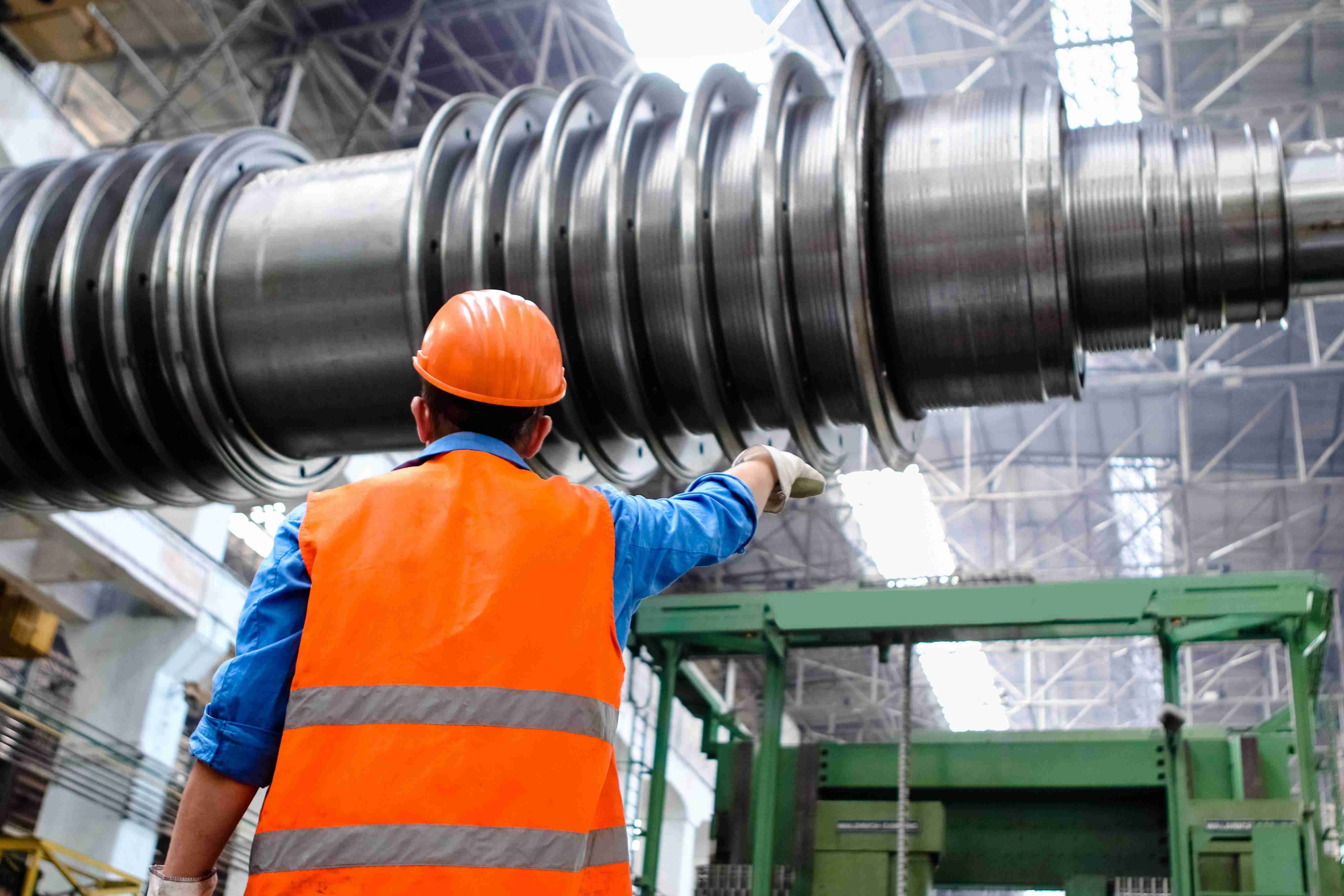
Every hour a critical pump, compressor, or turbine is down unexpectedly costs money — in lost production, emergency labour, and expedited parts. The difference between a plant that runs reliably and one that lurches from breakdown to breakdown usually comes down to a single decision: which maintenance strategy you apply, and to which equipment.
There are three broad strategies. Understanding what each one does, and where it fits, is the foundation of a reliable operation.
The three maintenance strategies
- Reactive (run-to-failure) — fix it when it breaks. Cheap to plan, expensive to live with. Acceptable only for non-critical, easily replaced equipment where failure carries no safety or production consequence.
- Preventive (time-based) — service equipment on a fixed schedule regardless of its actual condition: replace bearings every X hours, change oil every Y months. Predictable and easy to plan, but it can mean replacing components that still had life left, or missing a fault that develops between intervals.
- Predictive (condition-based) — monitor the actual condition of equipment and intervene before failure, based on real data. More sophisticated to set up, but it targets maintenance where and when it is genuinely needed.
The right answer is rarely all of one. A mature reliability programme applies preventive routines as a baseline and layers predictive monitoring on the equipment that matters most.
The condition-monitoring toolbox
Predictive maintenance is only as good as the diagnostics behind it. These are the core techniques used to read the health of rotating equipment, and what each one catches:
| Technique | What it detects |
|---|---|
| Vibration analysis | Imbalance, misalignment, bearing wear, looseness, and resonance in rotating machinery |
| Infrared thermography | Overheating, electrical faults, loose connections, and insulation deficiencies |
| Lubricating oil analysis | Contamination, wear-particle content, and lubricant degradation |
| Ultrasonic inspection | Bearing condition, steam-trap faults, compressed-air leaks, and mechanical defects |
| Motor Current Signature Analysis (MCSA) | Electrical and mechanical faults inside electric motors |
| Laser shaft alignment | Misalignment between pumps, motors, compressors, and drivers |
| Dynamic balancing | Imbalance in rotating assemblies and impellers |
Used together, these techniques allow a small deviation — a rising vibration signature, a hot bearing, metal particles in the oil — to be caught weeks before it becomes a failure, turning an emergency breakdown into a planned intervention.
The economics in one line
Predictive maintenance trades a modest, ongoing monitoring cost for the avoidance of a large, unpredictable failure cost. On critical rotating equipment, that trade almost always pays for itself.
When something does fail: RCFA and RCM
Good programmes don't just prevent failures — they learn from them. Two disciplines close the loop:
- Root Cause Failure Analysis (RCFA) — after a failure, systematically identify why it happened rather than just replacing the broken part. If a bearing failed because of misalignment, replacing the bearing without correcting the alignment guarantees a repeat failure.
- Reliability-Centered Maintenance (RCM) — a structured methodology that determines the right maintenance strategy for each asset based on its function, failure modes, and consequences. RCM is how you decide, rationally, which equipment gets predictive monitoring and which is fine on a preventive schedule.
Choosing the right approach for your equipment
A practical way to think about it: rank your equipment by the consequence of failure. For assets where failure stops production, endangers people, or damages expensive downstream equipment, invest in condition monitoring. For redundant or easily swapped items, a preventive schedule — or even run-to-failure — may be entirely appropriate. Spending predictive-monitoring budget evenly across all equipment wastes it; concentrating it on the critical few is what delivers reliability.
At Forza Nova, our mechanical maintenance teams combine both approaches — preventive routines backed by condition monitoring — supported by an in-house workshop for dismantling, precision laser alignment, bearing and seal replacement, and fabrication, with specialist partners engaged for advanced diagnostics and OEM-specific refurbishment. The goal is simple: maximise equipment availability and extend asset life while keeping maintenance cost under control.
Frequently Asked Questions
Need Support on a Live Project?
Our team is ready to help with maintenance, environmental, logistics, and project-support scopes across the Kingdom.
Contact Forza Nova